Sharing this for World Heart Day, 29 September 2023
After years of pretending to be ‘normal’ the pandemic pushed me to be open about living with a chronic illness. It’s so draining to mask a chronic condition, opening up taught me a lot about courage. Being honest about my physical limitations also led to a surprising number of acquaintances revealing invisible conditions that they had also felt compelled to hide. It’s 2023 and it’s time to loose the stigma that surrounds physical and mental health conditions.
If you’re a disabled artist you’re in good company, Frieda Kahlo, Chuck
Close, Van Gogh, Yayoi Kusama, are just a few names that spring to mind. They’re
examples of how a disability can become a superpower.
Here are five reminders that have taught me courage in life:
- Take each day as it comes
- You don’t need to battle yourself
- Ask for help when you need it
- People say stupid things, that’s on them
- Be open in your professional life
1. Take Each Day As It Comes
Some days you’ll feel as good as any regular Jo, others you might be stuck in bed. Having flexibility in your home and professional life is key. You need
energy to have courage. If you can plan out tasks in advance. Use good days for high energy tasks being mindful of what pace is realistic. We’ve all seen how pushing too hard can lead to a crash. On bad days don’t beat yourself up about doing the minimum (or nothing at all).
Some days won’t feel like gifts, be grateful anyway.

2. You don’t need to battle yourself
Stop the body battle. Your body is not your enemy. Instead of seeing your
body as something that needs to be pushed or controlled, accept that being
human means we’re imperfect. Every single human has something about themselves they want to change.
Work with your body and focus on what it can do. Thank your body for everything it does right, for example breathing in and out. The mirage of ‘life would be better if…’ taunts all of us sometimes. Allow yourself to recognise the negative thoughts and move on from them.
3. Ask for help when you need it
One of the hardest things is asking for help. The idea that needing help is ‘weak’
can turn a difficult situation into a debilitating one. We all need help
sometimes, even that ‘perfect’ fantasy person you secretly compare yourself to.
Be realistic about what you can achieve. If someone offers to help you take up
that offer. They feel good because they’ve helped, you feel good because you
know you’re not in this alone. Even on a good day it’s OK to ask for help.

4. People say stupid things, that’s on them
Firstly, most people don’t mean to say hurtful things. I’ve said plenty of
things I regret. I’m also certain that I’ll say something stupid again because
I, like you am a fallible human being. Everyone is dealing with something. If
you’re hurt by a comment ask for clarification, explain why you’re upset.
Secondly, there are always (a small number of) people who deliberately say hurtful
things. They belittle and one up others because of their own insecurities. If you have a broken wrist they have a ‘friend’ with two broken wrists and a broken leg. When you have it good they have it better, when you have it bad they have it way, way worse.
Remind yourself that this person’s life has absolutely nothing to do with
you, or your medical situation. Don’t allow people to guilt-trip you for taking
the time and space you need to thrive.
5. Be open in your professional life
Honestly, I wish I’d known this in my twenties. In your personal and
professional life tip three applies, ask for help when you need it.
People value the skills of resilience, positivity and communication. In being open you’ve shown how you stand up to adversity, have a positive attitude and can openly communicate your needs to others.
Why would you hide those skills?
I know how hard it is to be positive when you’re on the receiving end of negative reactions (remember, people say stupid things). There is support out there. Every arts organisation, grant funding body or artist collective has support in place for disabled / chronically ill artists.
Use the access support to clarify what adjustments you may need. A scenario for me relates to grant funding, generally there are a minimum
number of hours that need to be met within a (tight) time frame. If this timeframe looks too tight I negotiate an extension prior to starting the contract. Knowing that there’s extra time available takes the pressure off, allowing me to work at my own pace.
Celebrate what you can achieve. In your professional life, just as in your personal life build a team around you who help you be your best self.
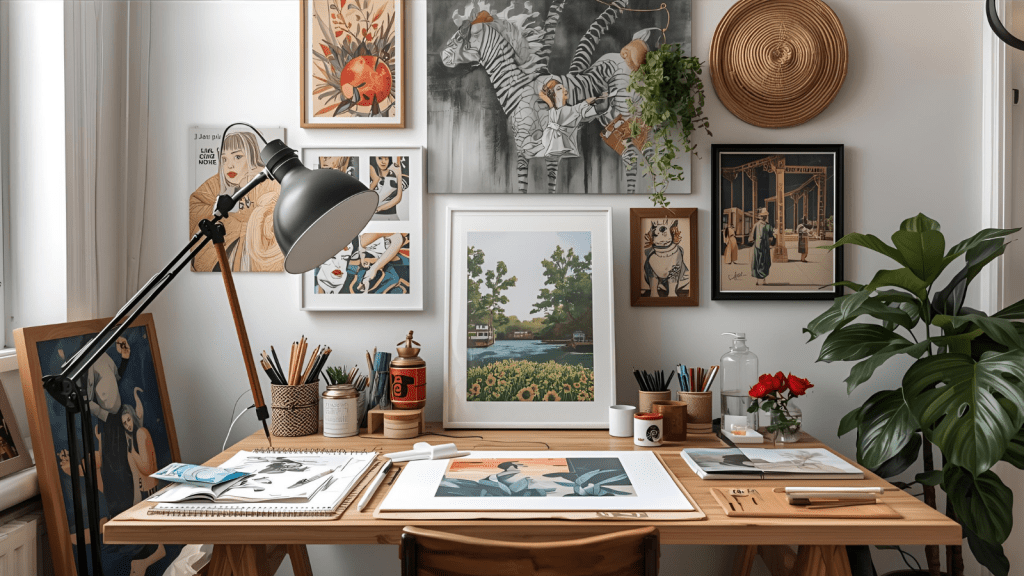
I really hope these five tips help you to gain the courage to be your wonderful self! Surround yourself with people, objects and art that you love.
Look after yourself and let me know in the comments what you do to make feel more courageous.
REFERENCE LINKS
Frieda Kahlo (MOMA)
Chuck Close (MOMA)
Yayoi Kusama (Tate)


 Charlie Kirkham
Leave a comment