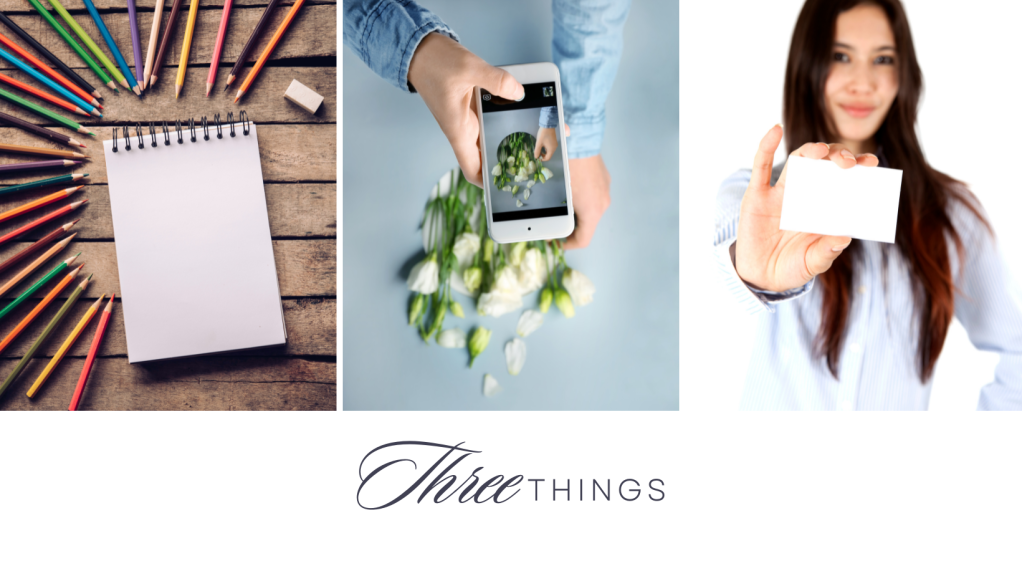
In this post we’ll cover which three things every artist should keep with them. They are things you’ll probably have on you most of the time. We’ll cover why they are helpful (from an artist’s perspective) and how they can help you supercharge your creativity. You’ll beat the pain of forgetting details, memories and wasting time and mental energy.
The result: more creativity, a bigger network and decreased stress.
Drumroll please…
- Camera Phone
- Sketchbook
- Contact card
OK, before you run away yelling “duh I ALWAYS carry these things” let’s go through the why.

1. Camera Phone
Our phones come everywhere with us. The smartphone is a double edged sword, it can be the best connection tool we own and the most isolating bubble. If you’ve ever sat doom scrolling in a comparison trap you’ll know how destructive that is to creative good vibes.
The camera phone is a fast way to record your memories when a sketch can’t capture things fast enough, or when you want to quickly return to something else. It’s a way to instantly log a moment.
It saves the cost of a separate camera (although professional photographers are worth their weight in gold LINK). Camera phones are great for building social media content via photos and video shorts.
You know all this…
How can my camera phone help me as an artist?
If you want to improve your creativity airplane mode is your best friend. Have a clear plan of how you want to use your phone BEFORE you pick it up. I use old school note books to list it all out e.g. take photo of studio, take video short of detail from latest work. Why do I list it out on paper? Because it’s too easy to pick up the phone for a snapshot and find yourself watching cat videos two hours later.
If you’re using the phone as a camera use it JUST AS A CAMERA for 30 minutes. Do not check apps, do not scroll, do not answer emails. Airplane mode can help force that focus.
A side note about camera phones: all those images get stored on the cloud, which has a massive environmental impact The Staggering Ecological Impacts of Computation and the Cloud | The MIT Press Reader. To try to lessen this impact schedule in time each quarter to delete images than you’re never going to need.
Let me tell you there’s something good for the soul about swapping doom scrolling for scribbling.

2. Sketchbook
There are some truly beautiful sketchbook artworks out there, none of which belong to me! For some the sketchbook is a prelude to finished works. For others, it’s a hot mess of thoughts (I’m in this camp!). It’s more of a listing process of inspiration for me, I jot down thoughts while they last and compose quick messy sketches to return to later.
Think about whether you like to tear out pages, if you gift sketches or put them up on the studio walls spiral bound sketchbooks are great for this. If you’re using the sketchbook for idea gathering or basic mess sketches cheap A5 glued notepads can work really well.
If you work on sketchbook pages for a long time invest in the best sketchbook paper you can afford. A hardback sketchbook that’s stitch bound will last longer than a glued book. If you can remove the pages at a later date to sell as stand alone works even better.
To totally level with you here, I use a board method rather than a book. Depending on the size of my bag I have an A5 clipboard with a few sketches of paper, pencil and eraser. A ‘car sized’ board with a sketch sheet and various inbetweeners. I use very heavyweight papers so my ideas tend to start on the paper and turn into finished sketches. It’s like having a sketchbook of multiple sizes in every location.
Sketchbooks — Dina Brodsky absolutely glorious sketchbook examples

3. Business / Contact Card
You literally never know when you’re going to meet someone. Always carry a contact card. We’ve all met artists and asked to see their work only to wait ten minutes until they find a half finished painting somewhere in their phone photos. It’s not a great first impression to make. Likewise, when you meet an artist who has their card ready, plus extra images ready to show on their phone you know that this is a professional who values their own work and other people’s time.
If you can add an image to your card do it. It’ll help jog people’s memories. Make sure your socials, website and a contact email are all listed clearly. Keep the font readable. Even in this day of digital connection a physical contact card is useful as a memory jogger.
(Read this post on how to easily share your artwork when you’re out and about)
BONUS BRING
Here is a totally free thing that you’re never without but might sometimes forget to bring: yourself!
As creatives sometimes we’re so busy recording the feast of life we can forget to eat anything.
Step back, put down the phone, camera, sketchbook or other props and really be present in a moment. Bring yourself to the party. Don’t worry about what people will think. Bring yourself into your art practice and your life by mindfully working will rocket your creativity and confidence.
We’ve covered which three things (Camera Phone, Sketchbook, Contact Card) to always have with you to support your artist goals. Plus the bonus.
- One: in thinking about what you want to use the camera phone for first you’ll replace wasted time with creative time.
- Two: when you can jot down ideas and sketches or sit and observe for hours you open new areas of your eyes and mind to life.
- Three: when you have a contact card you can always keep in touch.
Bonus: when you bring yourself into your work and life, without fear, you open up new confidence and creativity.
Thank you for reading, every artist is different and I’d love to hear which three things you’re never without. Let me know in the comments.
REFERENCE LINKS
The Staggering Ecological Impacts of Computation and the Cloud | The MIT Press Reader

 Charlie Kirkham
Leave a comment