Working with black ink and diluting it through the range of greys is a great way to learn about tonality, brightness and form. It’s an affordable and deceptively versatile medium to work with.
How to get started
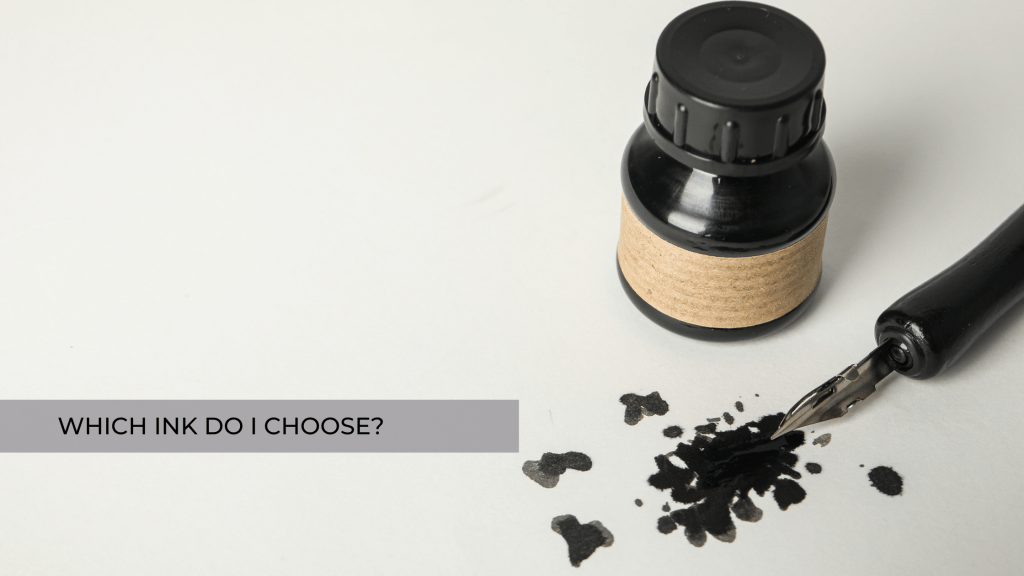
Types of ink:
- Indian (Chinese) Ink-this is the most traditional kind of ink, it has no shellac binder so layers will bleed into one another when painting wet over dry
- Black Indian Ink – the focus is on this shellac binder containing ink as this is the most likely ink that you will come across
- Acrylic Ink if you’re using acrylic inks there will be acrylic dilution medium that is compatible, for example a glazing medium Professional Acrylic Ink | Liquitex. Acrylic ink is essentially diluted acrylic paint with binder to help it flow. It does not dilute with water in the same way as Black Indian Ink.
- Inktense Pencils /Ink Sticks – these are strongly pigmented crayons, pencils and sticks that function in a similar way to watercolour pencil. They will bleed through wet layers applied above (depending on the brand)
- Ink Pen- can be a great addition to brush painting with Black Indian Ink, especially if you choose waterproof ink to avoid bleeding layers.
The focus of this article is on Black Indian Ink. It’s easy to source and the type that you’re most likely to have at home or find in your local art store.
If you are intending to work in layers make sure that the ink you are using is water resistant or contains a shellac binder.
Types of water
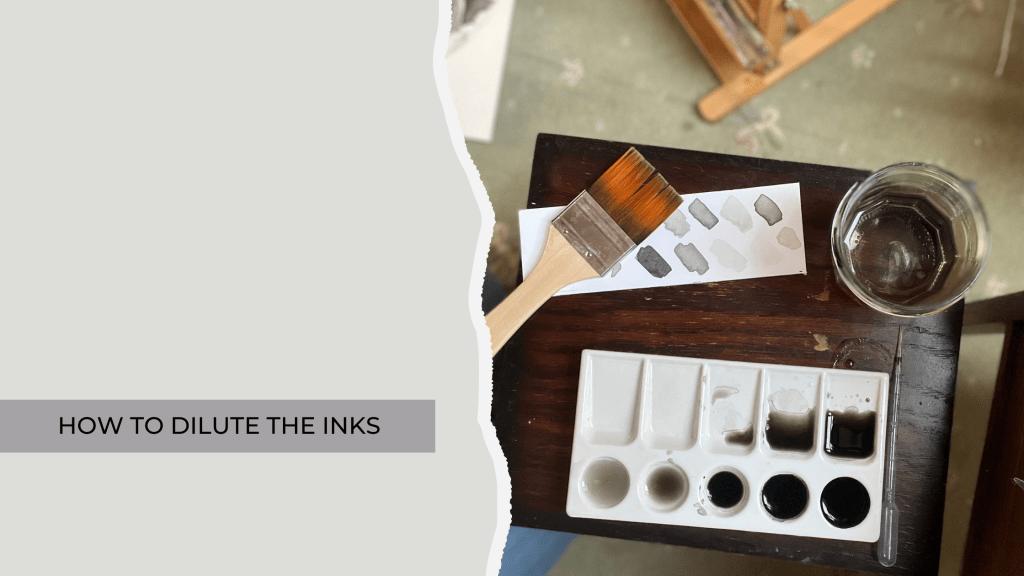
Ideally ink should be diluted using distilled water. You can use cooled boiled water but some minerals and fluoride will remain in the water. The fluoride and minerals found in tap water cause separation in the ink. If you used distilled water you can store the diluted inks after each painting session.
Set out either an ink palette (as in the photo above) or a series of small jars. One should be for the undiluted ink to give you the blackest black. Use a small pipette to measure out 1:10 dilution (ink:water) and upwards. You can even do this by eye by mixing the water and ink spontaneously.
If you need a precise mid-tone for multiple pieces use a jam jar with lid to measure the ink and water out. Write on the jar what ratio of ink to water it contains. Seal with a lid to keep for next time. Sealed ink jars can last for months.
Types of paper
Thick paper works best, there are so many choices out there!
I use handmade heavy textured rag paper from Two Rivers. Watercolour paper also works well and comes in both rough and smooth finishes.
Whichever paper you choose to use, it’s vital you stretch the paper first.

Tips to get started:
- Stretch your paper, or use a watercolour block or other solid surface. Putting the time into prep work here will save you a whole load of pain later on.
- Have a palette or range of small jars or pots ready
- Dilute the ink to various levels ranging from undiluted jet black through to almost colourless
- Have multiple brushes / sticks/ drawing implements so you can use one per ink pot
- Have kitchen roll or rag handy, you’ll need it to avoid splodgy painting
- Enjoy the process!
Techniques and fun things to try
- Draw in ink using sticks or create texture by dropping paper into the image
- Throw some rock salt onto a wet ink painting to create fun textures and add interest (leave on until painting it totally dry then sweep off)
- Try out different papers to see which you like best
Artists who’ve used ink and wash include Hokusai and Goya. I’ve included two of their images below to show just how versatile ink can be. For further reading check out this post from The Met, which includes how ink is made and which artists in their collection have used it Ink | The Metropolitan Museum of Art.


Francisco de Goya y Lucientes (1746–1828)
Repentance (Album F. 47)
c. 1812–20
Brush and ink with wash
Gregory Callimanopulos
CAT. NO. 40
REFERENCE LINKS
Professional Acrylic Ink | Liquitex advice on using acrylic ink including dilution medium and tips
Spotlight on Indian Ink | Winsor & Newton (winsornewton.com)
Jackson’s Art Supplies (jacksonsart.com) for exploring different types of inks
Inktense Pencils | Derwent UK (derwentart.com)
The Frick Collection: Exhibitions: Future Frick Collection Goya Exhibition Online Catalogue
The rediscovery of Hokusai’s drawings of ‘everything’ | British Museum
Ink | The Metropolitan Museum of Art (metmuseum.org) A really great post about the origins of ink and a run through of some artists in the Met who’ve used it
The paper at Two Rivers Paper Company

 Charlie Kirkham
Leave a comment