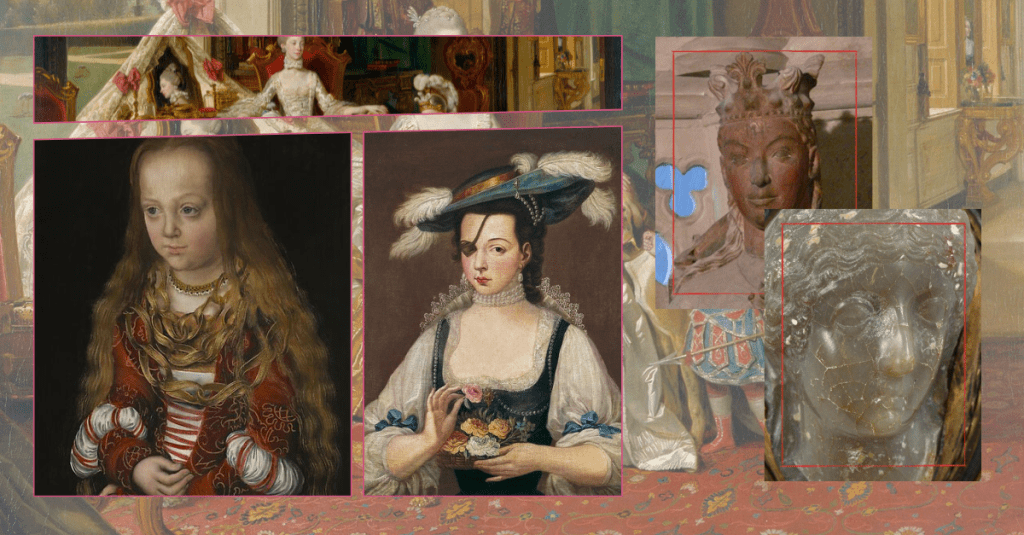
As I began researching this post there were so, so many wonderful images that it made sense to split the subject.
The depiction of princesses in art and in the popular imagination has always been reflective of the gender roles of that time. It’s impossible to take off our 21st century glasses when viewing the past, to see these women as they would have perceived themselves. My artwork focusses a lot of the interplay between contradictions and the character of Princess sums these up well.
In this post, we must view the term ‘princess’ in its broadest sense, encompassing women in positions of authority who held influence and navigated the delicate dance of power. Let’s enjoy a few of the inspiring treasures en route to understanding more about some of these extraordinary women.
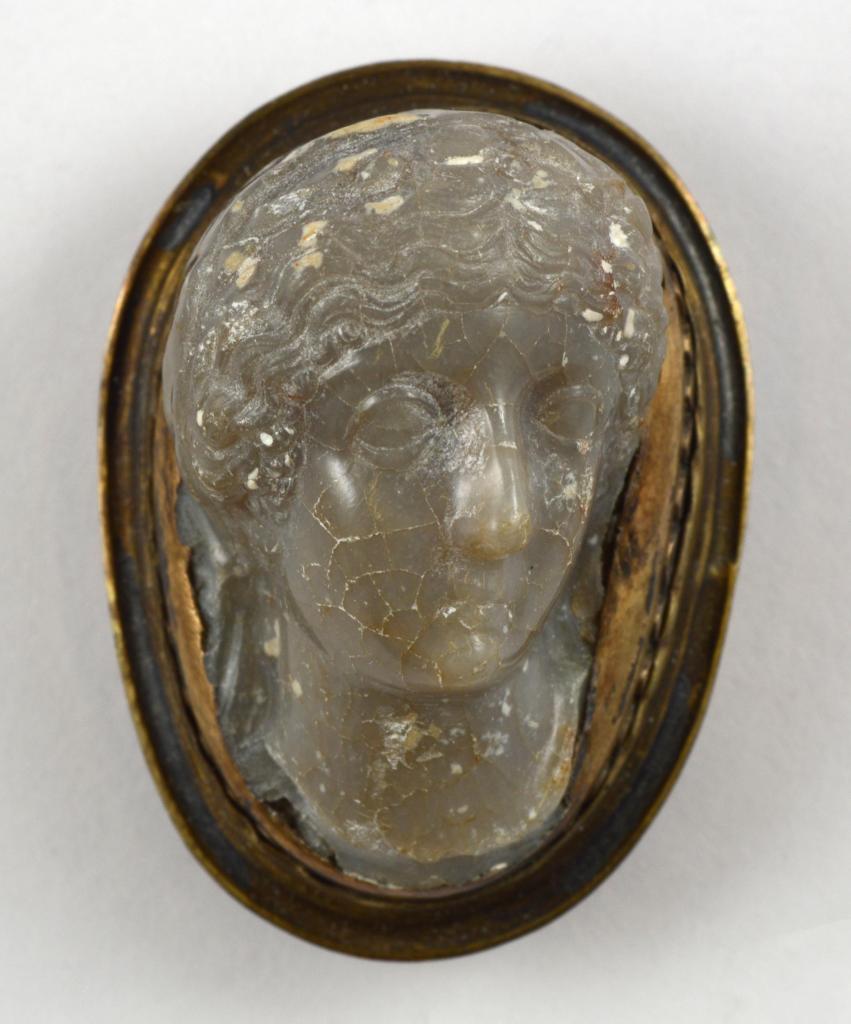
This cameo creates an idealised version of womanhood, very different to the later idealised princesses we see. Livia is portrayed as the paradigm of matronly virtue in Roman society. From the careful headdress covering the majority of her curls to the features. She is shown as a beautiful dreamy ideal in this cameo. What appealed to me about it was the enormous eyes with their almond gaze appearing almost all knowing.
If you want some inspiration from the strong women of the past look up the extraordinary life of Livia Drusilla.
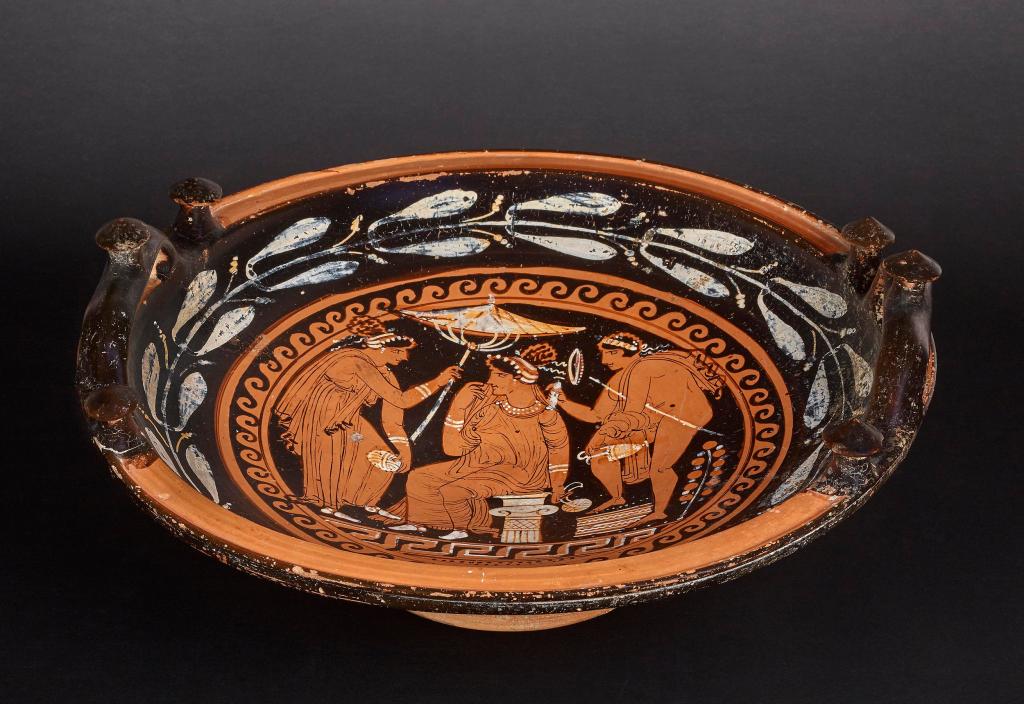
What is it about this colour combination that is so intoxicating?
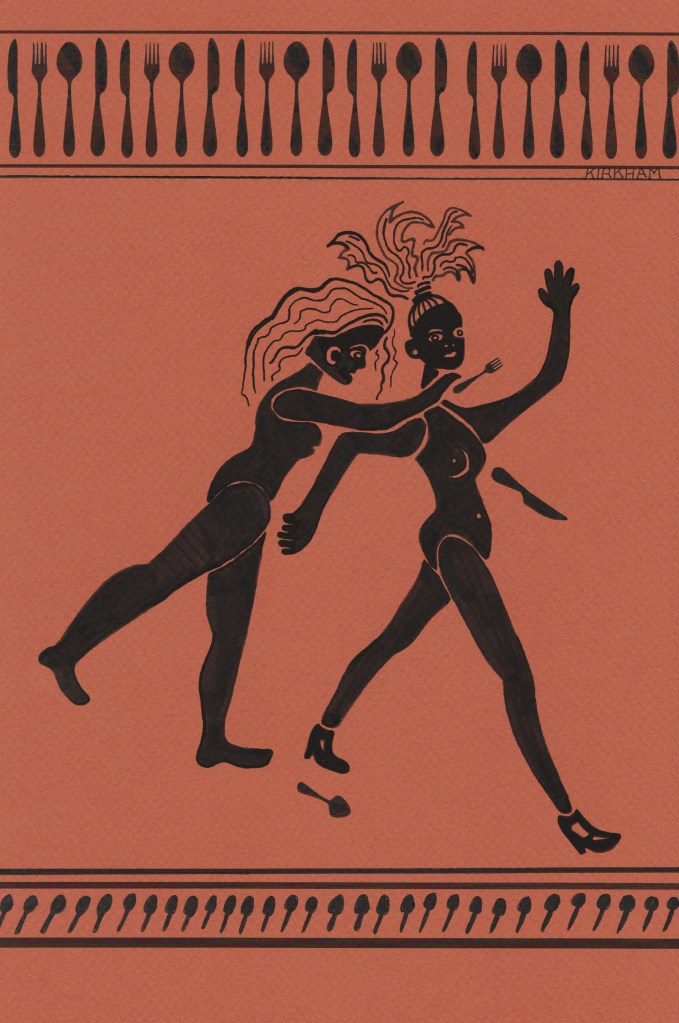
I love the mystery of this luxurious footbath, the way the left figure is stooping slightly to avoid hitting the border decorations, the merger of the figures into the background.
In a personal exploration of this mesmerising color scheme, I’ve delved into the creation of a sketch series featuring the figures of justice and injustice in battle.
Let’s jump forward in time to Princess Eadgyth (pronouced Edith) of Wessex. Another fascinating life, now corroborated with new evidence she was a tenth century princess who married the king. Known for her linguistic skills, political savy and (rumoured) bad temper she was crowned as Queen after her marriage, an anomaly for the time.

Alongside a fascination with the limited palettes of ancient pottery, the German Renaissance has charmed me too. As you’ll know if you’ve been following for a while, Lucas Cranach is a big inspiration source in my own work. Let’s hop into Saxony now, where this glorious princess is waiting.
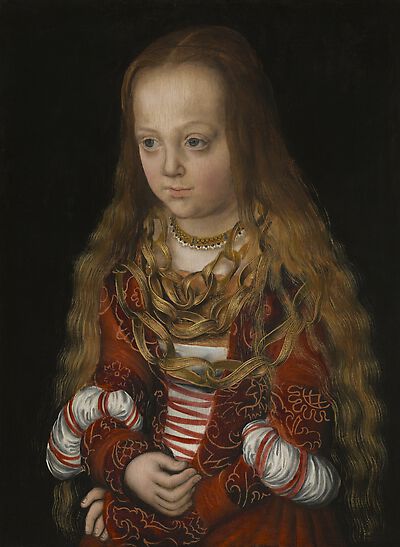
This portrait has held a deep fascination for me for some time. I’ve sketched it, painted it and generally dreamt of it. What I find intriguing is looking at a portrait of a child who has long since grown up, lived and died. It has this strangely surreal aspect to it observing the frozen moment. The detailing in her red dress and the mix of the hair with the necklace is sublime. She looks every inch the Saxony Princess.
A Princess after my own heart is the sixteenth century Ana de Mendoza y de la Cerda, Princess of Éboli, nicknamed the ‘Pirate Princess’ after (supposedly) loosing her eye in a duel and thereafter wearing her trademark eye patch. How can you not feel intrigued by this mysterious beauty?
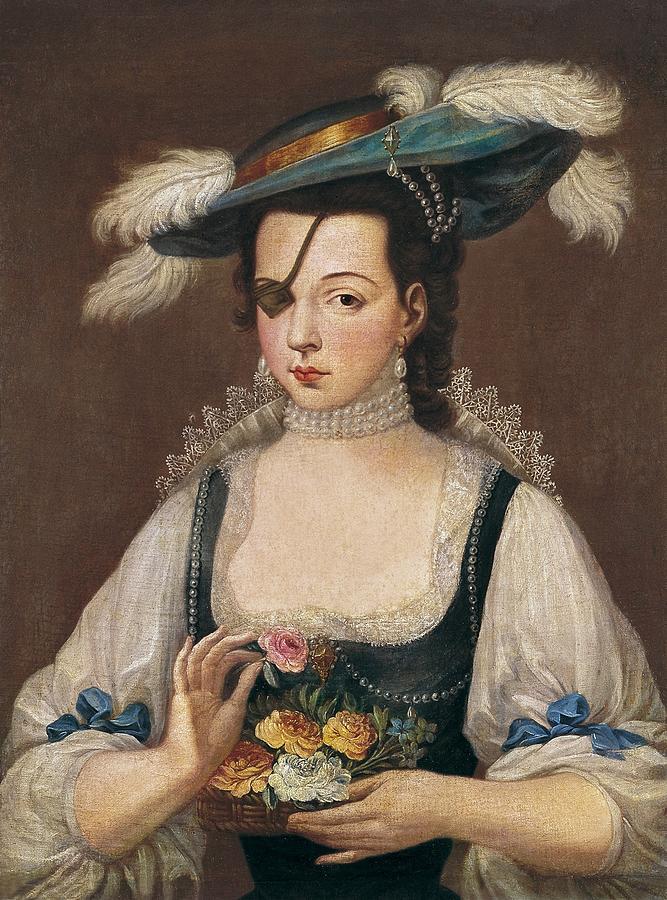
What I think appeals most about her portrait here (painted by Sofonisba Anguissola) in the intensely feminine beauty and dress, combined with flowers contrasted with the combative gaze and eye patch. Despite the tragic ending to her life she has inspired artists both in her own time and for generations afterwards.
The final inspiring Princess today is Queen Charlotte. The portrait of her by Zoffany reflects the 18th Century ideals. She is shown beautifully dressed, artfully arranged against the view with her dresser behind her. Regular changes of clothing were de rigour at the time and involved many, many layers of clothing.
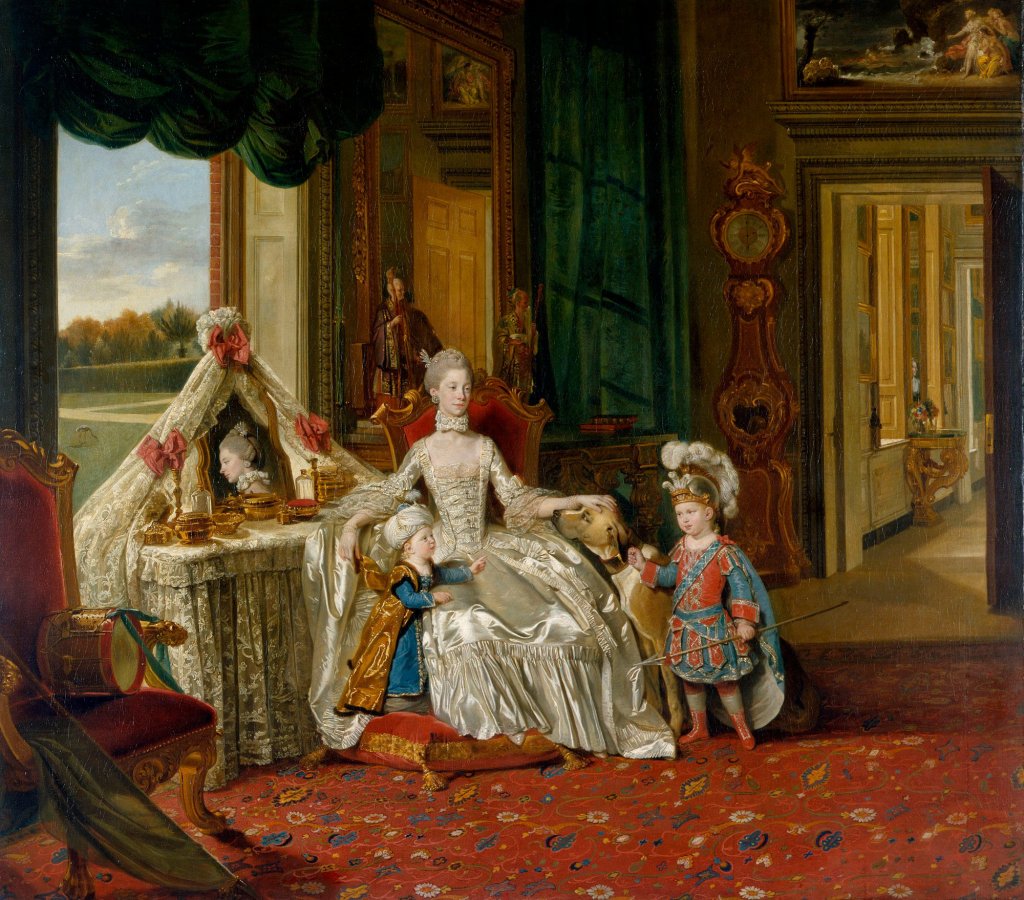
Clothing was an integral part of signaling social rank in 18th century England. It’s extraordinary when you look at the outfits in this painting how many layers even the small princes are wearing. Queen Charlotte sits perfectly upright with the flat back and cinched waist fashionable at the time. In this painting she seems almost ethereal, more an idea of a Queen than a human woman.
The silver fabric with all its tiny details of lace and jewels is wonderful in this painting. This painting shows a passive figure, almost functioning as another decoration in the space.
Exploring different representations of the Princess Motif is one way I gather ideas for my own drawings. It’s been great sharing the sources of inspiration with you. Let me know which princesses in art you’ve been most inspired by.
REFERENCE LINKS
Foot bath podanipter | British Museum
2010: Eadgyth’s identity confirmed | News and features | University of Bristol
A Princess of Saxony by Lucas Cranach (thehistoryofart.org)
Why the art world is crazy about Cranach (theartnewspaper.com)
Rebelious Princess of Eboli | DailyArt Magazine | Art History Stories
Sofonisba Anguissola | Biography, Paintings, Art, Self-Portrait, & Facts | Britannica
This Italian artist became the first female superstar of the Renaissance | National Geographic
Paintings :: A Princess of Saxony (lucascranach.org)
Getting dressed in the 18th century | National Museums Liverpool (youtube.com)
CHARLIE KIRKHAM NEWSLETTER
Sign up for free and be the first to get notified about updates.



 Charlie Kirkham
Leave a comment