
One thing that many of us have learnt in the past few years is that regardless our homes are more than a place to sleep. They can become schools, offices, playgrounds, far-away lands and art studios!
There are pros and cons of working from home, for today let’s focus on the how rather than the why.
- Utilise Vertical Space: Make the Most of Your Room’s Height
When floor space is limited, look up! Using the height of your room can provide you with additional storage and help keep your workspace tidy.
The key to making a space work is thinking through storage. This is especially true if you create 3D works, works on canvas or larger artworks.
Unless you have very low ceilings there’s generally a gap between comfortable working height and the ceiling height of a room. If you work large this may not be a massive gap. Wherever possible use the ceiling and the higher areas of wall for storage.
- Install Shelves or Pegboards: High shelves can be used to store materials you don’t need every day, unused art supplies, or reference books. Pegboards can be mounted on walls to hang tools like brushes, scissors, and rulers within easy reach.
- Tall Storage Cabinets: Choose cabinets that extend all the way to the ceiling. You can store less-used items on the top shelves while keeping essential supplies within arm’s reach.
- Hanging Bins or Buckets: Attach hooks or rods to walls where you can hang bins or buckets for smaller items like paint tubes, markers, or chalks.
An easy way to do this is to create a wall racking system or use wood batons ad hoc. See my post here on baton storage.
Pro tip: Use labeled bins or clear containers to avoid clutter and ensure you can always find what you need without rummaging through everything.

- Things that fold
In a small art room, having furniture that folds away when not in use can make a huge difference.
If you’re sharing a space or using it both as an art studio and kitchen diner etc. nothing is more helpful than folding furniture. A decorators table, field easel and folding chair can transform a space temporarily.
When I lived in a single room in London my hack was to create works that fitted on the back of the door. For larger pieces I used a large piece of plywood that lived under my bed at night and on top of it in the day to draw on.
- Foldable Decorator’s Table: A lightweight, foldable table can serve as a large work surface for painting or crafting but can be tucked away when not needed. This is a game-changer if your room doubles as living space.
- Collapsible Easel: A foldable easel (think plein air or field easel) allows you to set up a painting station, then pack it away to free up space.
If you have existing furniture in the room, for example a kitchen table, getting a tressel leg and plywood to extend this for large works can be super helpful. For smaller spaces, tables that fold from the walls can offer temporary desks without blocking your way.
Pro tip: Store foldable furniture behind a door, under a bed, or even hang it on the wall to keep the floor clear.
3. Store it Up
While access to storage space (think your mum’s spare room) is the ideal, realistically you may need to keep everything on site. For paper works tubes offer efficient ways to store works until there’s space for a plan chest. For larger canvas works think of the ceiling racking as an option, or keep them under the bed.
Not all art supplies need to be on hand 24/7. For materials or projects you’re not actively working on, boxed storage is a smart solution.
- Store Boxes Elsewhere: Keep only the essentials in your art room. Seasonal or project-specific supplies can be stored in closets, under beds, or even in other rooms*. Use labels to help you stay organised.
- Use Storage Boxes as Surfaces: Storage boxes aren’t just for packing away supplies—they can double as functional surfaces. Large, sturdy boxes can be used as tables, or opt for box chairs or ottomans that offer hidden storage. This adds versatility to your space without adding extra furniture.
*Pro Tip: never store artworks in the bathroom, I learned the hard way that they warp really fast…
- Box Chairs and Ottoman Storage: Box-style chairs or ottomans can offer seating and storage in one. These pieces can hold sketchbooks, paints, or fabric while also serving as comfortable seating or even a makeshift work surface.
- Storage Carts with Flat Tops: Rolling carts with drawers or shelves provide mobile storage, and their flat tops can be used as additional work surfaces when needed. You can move them around to create flexible workstations or tuck them away when you need extra space.
Pro tip: Opt for storage on wheels to easily rearrange your space as needed, whether you’re working on a large project or cleaning up after a creative session.
- Walls!
The walls can become part of your storage space. I use a batten hang systems for boards and canvases as they dry, allowing more space for things to dry.
A batten hanging system is an ideal solution for displaying and storing canvases, boards, or paper. This wall-mounted system allows you to hang artwork or large boards and move them around as needed.
- Why it works: It keeps your floor clear and offers easy access to materials. You can swap out boards, canvases, or even large sketchpads depending on the project you’re working on.
- Bonus: It also doubles as a display system for finished artwork, drying paintings, or showcasing pieces in progress.
Pro tip: If you work on multiple projects at once, you can hang different canvases and rotate them as needed, without cluttering your workspace.

6. Designate a Wall for Inspiration – Keep Your Creativity Flowing
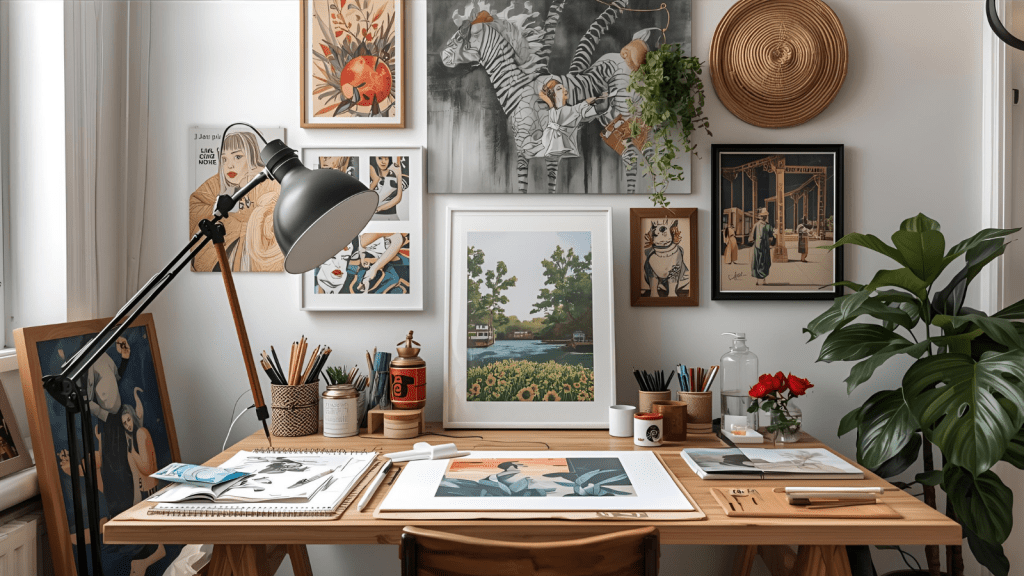
On another wall, leave a clear space for paper sketches and colour samples or inspiration- this can be in any form from pieces of writing and poetry to paintings and sculptures that inspire you to pictures of people you love. Whatever gets your creativity flowing!
- Create a Pinboard or Paper Wall: Reserve one wall in your art room where you can tack up inspiration posters, color palettes, or ongoing project ideas. This gives you a visual space for brainstorming without cluttering your work surfaces.
- Magnetic or Cork Board: Mount a large cork or magnetic board on one wall, so you can easily switch out references and inspiration as your projects evolve.
An at home art space is a truly wonderful thing and an excellent use for a room that isn’t getting as much attention as it should!
Turning a room into an art studio can be incredibly rewarding, but space constraints can often limit your creativity. Whether you have a small spare room, a corner of your living space, or a shared multipurpose area, maximizing every inch of your art room is key to creating a functional and inspiring workspace. By focusing on vertical storage, multifunctional furniture, and clever organizational systems, you can transform even the smallest room into a highly efficient art studio.
REFERENCE LINKS
Link to a folding decorator’s table that I’ve used Oypla 6ft 1.8m Folding Heavy Duty Catering Trestle Party Garden Table : Amazon.co.uk: Garden
Enjoy creating your own peg board with instructions Build your own peg board storage – Ideas & Advice | Wickes.co.uk
CHARLIE KIRKHAM NEWSLETTER
Sign up for free and be the first to get notified about updates.


 Charlie Kirkham
Leave a comment