(And Why You Might Want to Think Twice Too)
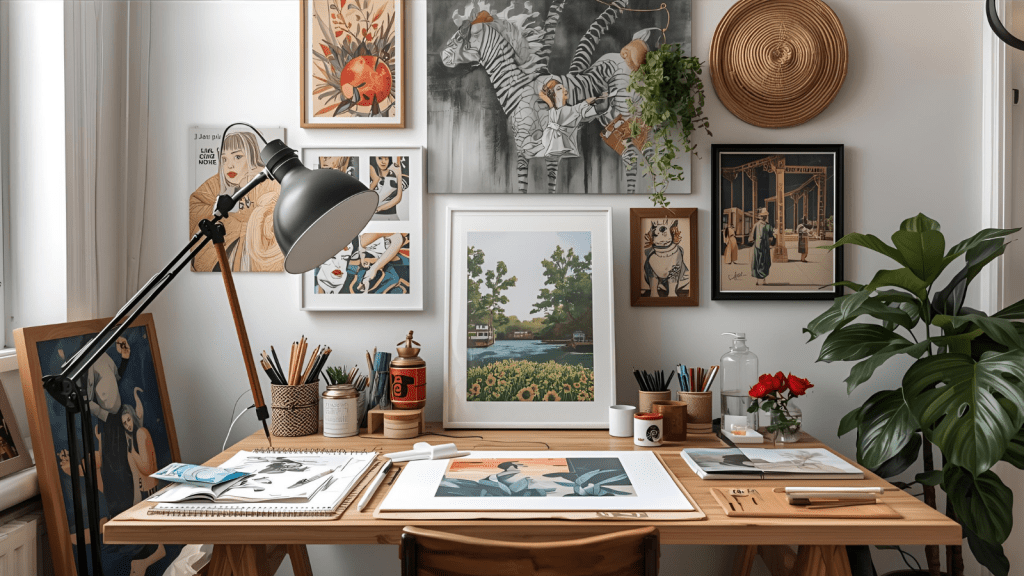
As art school drew to an end I had big dreams, a spacious white wall studio where I’d create amazing paintings. Possibly while pondering the meaning of life in coffee shops and magically attracting wealthy collectors. We’re often sold this idea that to be a serious artist you need a serious space.
Here, I’m going to recount the disaster of my first studio and why it’s not always a good move to part with the cash to get the studio.
My first studio was in London, newly graduated from The Heatherley School of Fine Art, fresh teaching qualification and a few guaranteed teaching hours. In the naive optimism of the era I rented the biggest studio space I could cover with my teaching hours, obviously not worrying about factoring in food, bills or transport costs. I mean artists have to focus on higher things right?
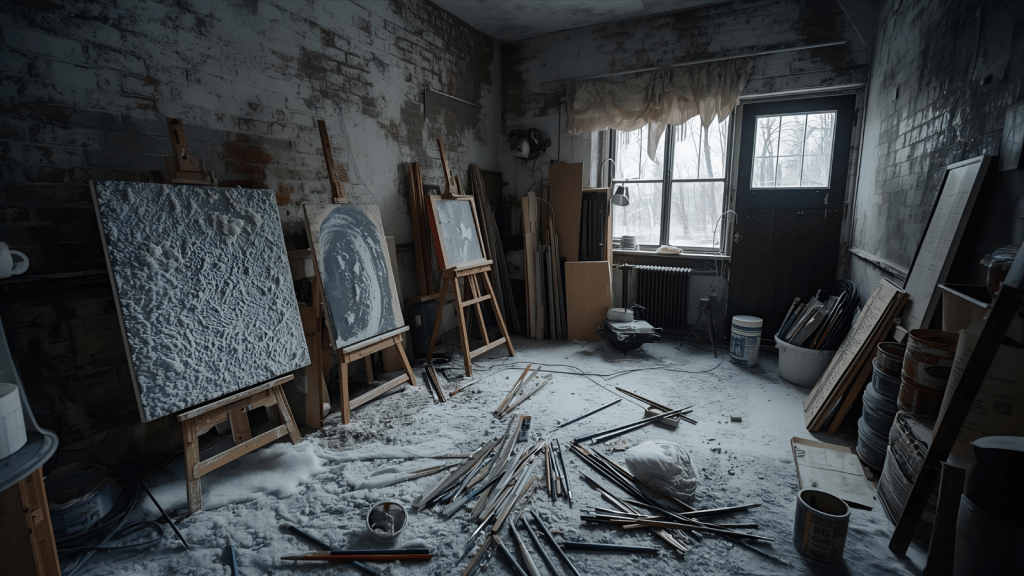
Within a few months I couldn’t cover my rent and my studio rent, so I moved into the studio (this wasn’t allowed but most of the artists there were living there). The big downside? Even with the electric heaters on the building was freezing. FREEZING, like in the literal sense.
That winter I enjoyed multiple chest infections before chronic bronchitis set in. The heaters were on timers but as none of the big, bold, exploratory works were selling. Despite walking everywhere to save on transport costs, buying groceries in the marked down fridge at the end of the day and generally playing the garret dwelling artist, the teaching hours needed to go up to cover the studio cost.
The building was condemned in the February. Another chest infection and the offer of a full time teaching gig near my parents cemented my decision to leave. The studio block was demolished to make way for housing.
Within 12 months of graduating my studio dream was replaced by moving back into my childhood bedroom. Luckily, with the perks of heating and home cooking the bronchitis finally improved. It was 8 years before I rented an art studio again, this time around with grant funding, savings and realism.
To save you having the same unpleasant experience, here are some things to consider before renting an art studio.
1. The Financial Reality Is Brutal
If you’re just starting out, hitting a slow period or simply don’t want the added financial pressure parting with rental each month can be the wrong move. In Birmingham studios can start at £650 per calendar month, that’s a whopping £7800 each year. Before you’ve sold a single artwork.
Yes, BEFORE YOU’VE SOLD A SINGLE ARTWORK.
Don’t forget to add on the Public Liability Insurance (I get mine via VAA for £11.99 per month), any utility bills (most studios do not include electricity) and any key deposit or communal funding costs.
There’s also a time element, there may be an expectation of volunteering a certain amount of time each month, which again has financial implications.
Think about what else you could do with that money. Marketing, courses, materials, gas bill. For many points in my career renting a studio just wasn’t worth it financially. A home set up costs nothing on top of the bills you’re already paying.
2. The Logistics Eats Your Life (and Your Practice)
First up: the commute
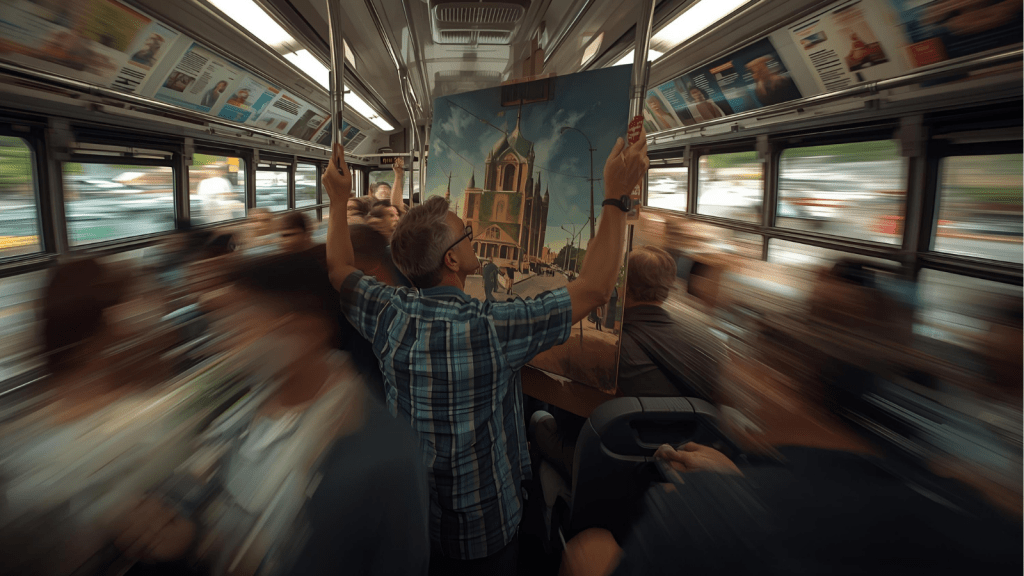
Getting to a studio sounds romantic until you’re doing it in February rain with a 120 × 150 cm canvas on a crowded bus. Think through the logistics of getting there, getting back and how realistic that is. Working from home means no commute time and no logistical nightmares with delicate works on public transport.
Opening Hours:
Want to paint between 10pm and 2am? Home is the place to be, no worrying about walking down dark alleys, heating up a freezing cold studio or trying to get home afterwards. Some studios have limited opening hours to boot, not ideal if you’re shoehorning your practice around 40 hours of employment.
Storage:
There’s limited storage in many art studios so a far amount of your stuff is going to end up at home anyway (or piled up in your old room at your Mum’s – thanks Mum!). If you’re keeping things at home or need to keep bringing bits back and forth it might be easier just to stay in the house.
All logistics have a friction point, at different times in your career these will change.
(Quick aside: crunching these numbers and writing honest posts like this takes hours every week. If this reality-check is useful, please consider buying me a coffee. £3–£5 literally keeps the blog ad-free and running → Buy Me A Virtual Coffee ☕)
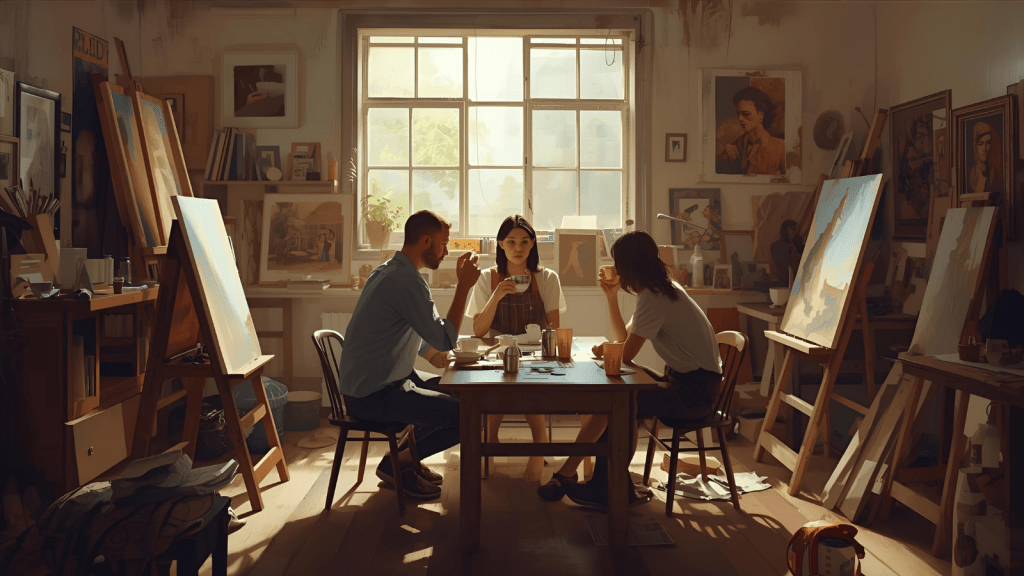
3. Community & Opportunities? They Don’t Require Rent
Yes, being around other artists is magic. Yes, open studios and curator visits are career-changing. None of that actually requires paying rent 12 months a year.
- You can find co-working spaces and book single days when you need a boost
- Join pop ups or artists run spaces for a short run and smaller fee
- home studio open studios, many open studios encourage artists to share their home studios publicly.
- From the Warwickshire Open Studios through to Birmingham Open Studios often artists find shared spaces or just offer ‘by appointment’ slots to share their home studios with the world.
- -Online communities, crit groups, Discord servers, Instagram Lives, the peer support 24/7, for free.
The myth that you need a permanent rented space to be taken seriously is a myth, and an expensive one at that. When you weigh up whether to rent a studio or not really think over where your art practice is now, what is in the pipeline and the pros and cons.
P.S. If this post saved you from signing a lease you’d regret (or just made you feel less alone), here’s the coffee link again: Buy Me A Virtual Coffee
Have you ever turned down a studio for financial or logistical reasons? Or did you take the plunge and regret it? Spill the tea in the comments!
REFERENCE LINKS
Artist Insurance – Visual Artists Association
Heatherleys School of Fine Art
Home – Birmingham Open Studios
CHARLIE KIRKHAM NEWSLETTER
Sign up for free and be the first to get notified about updates.



 Charlie Kirkham
Leave a comment