
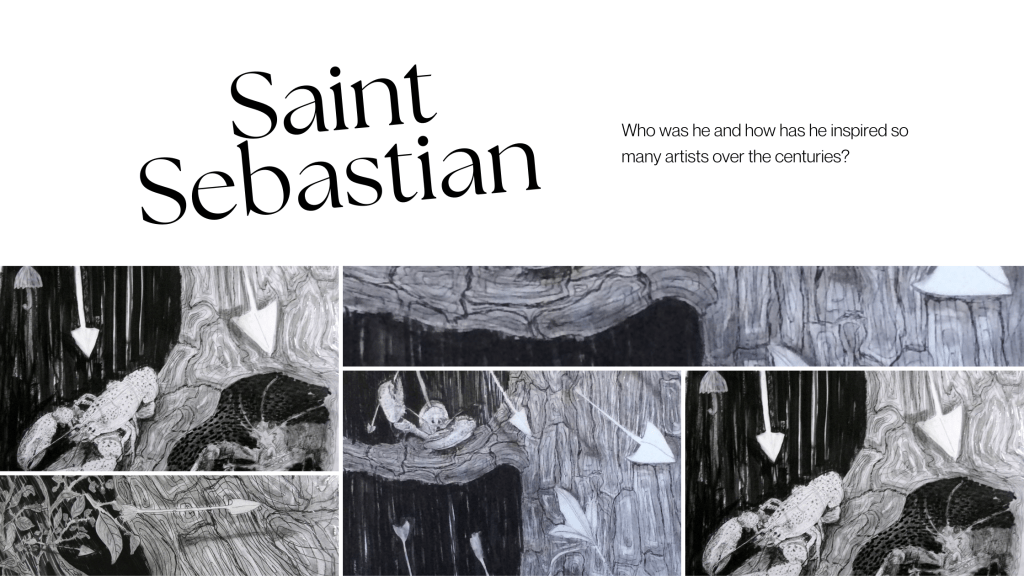
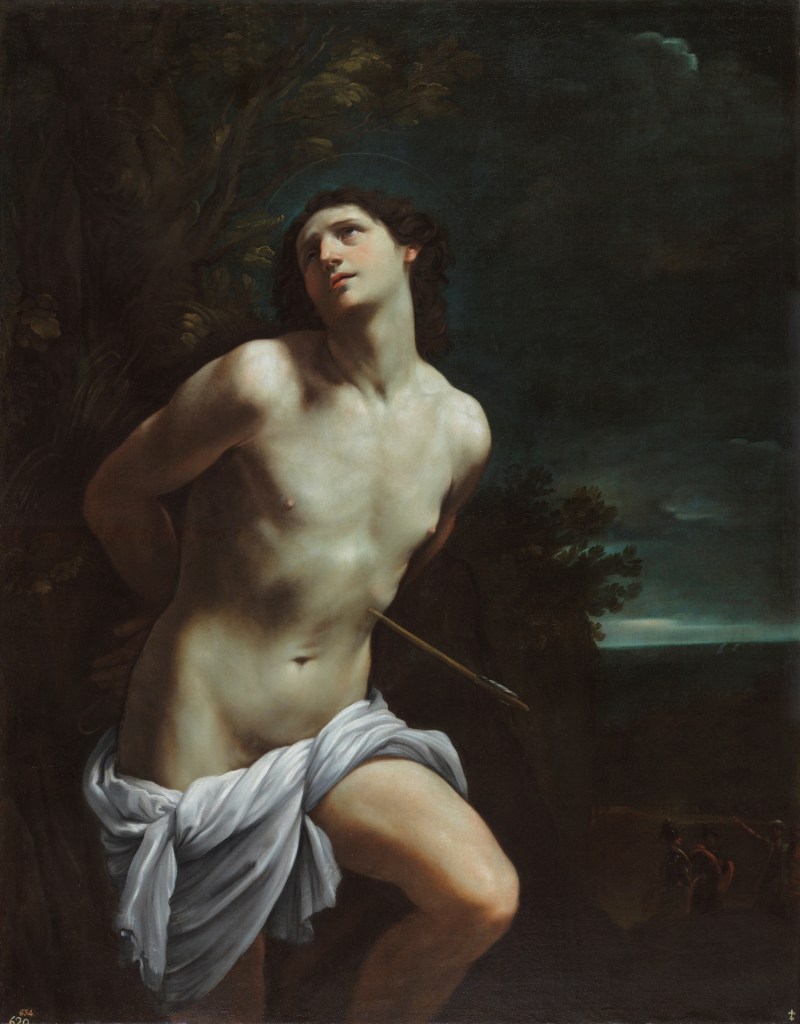
The 20th of January is Saint Sebastian’s Day. For anyone familiar with art history, this saint has been iconic. From the idealisation of Guido Reni to the still life interpretation of Euan Uglow there have been depictions of this figure in every age.
The Story of Saint Sebastian:
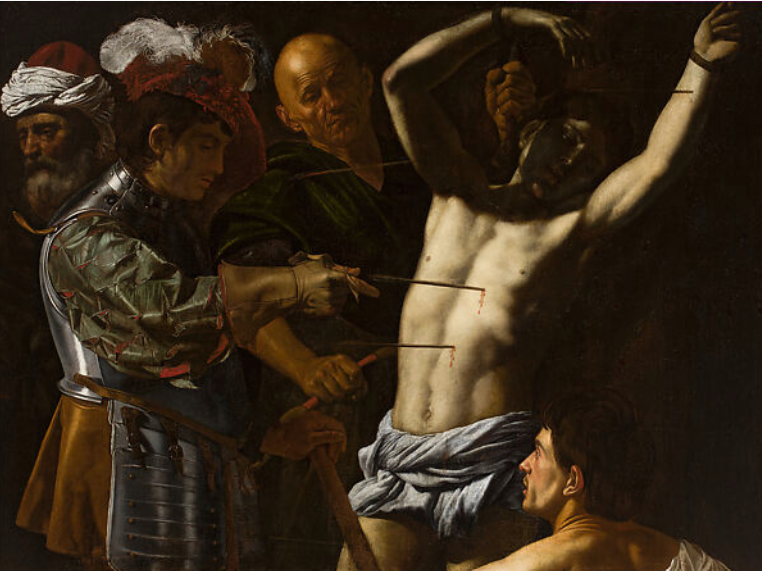
The original story goes that he was persecuted during anti-Christian campaigns culminating in his being bound to a tree and pelted with arrows. Miraculously he survived to confront the perpetrators only to be beaten to death. Saint Sebastian’s legend is interlinked with the legends of other early saints Irene and Lucy.

Symbolism in Art:
How is it that a third century middle aged Roman soldier became the stuff of homoerotic legend?
Artists have been drawn to Saint Sebastian for centuries, the image of a man tied to a tree (or post) and pierced by arrows is an enduring motif. It transcends the literal and has often been used to explore the contrast between textures (flesh and metal) alongside the symbolism. Sebastian’s stoic endurance of his suffering makes him a symbol of unwavering faith and courage in the face of adversity. His double life (as both loyal Roman soldier and secret Christian) is perhaps the most intriguing aspect for many artists.
Medieval depictions of Sebastian favoured the middle-aged look, while Renaissance painters created a sensous idealised young man. In the depictions of the young and beautiful Sebastian the themes of desire, vulnerability and hidden love are explored. As a martyr who survived arrows Sebastian became the saint of archers and athletes, he was also counted upon to protect victims from Bubonic Plague.
What drew me to Saint Sebastian?
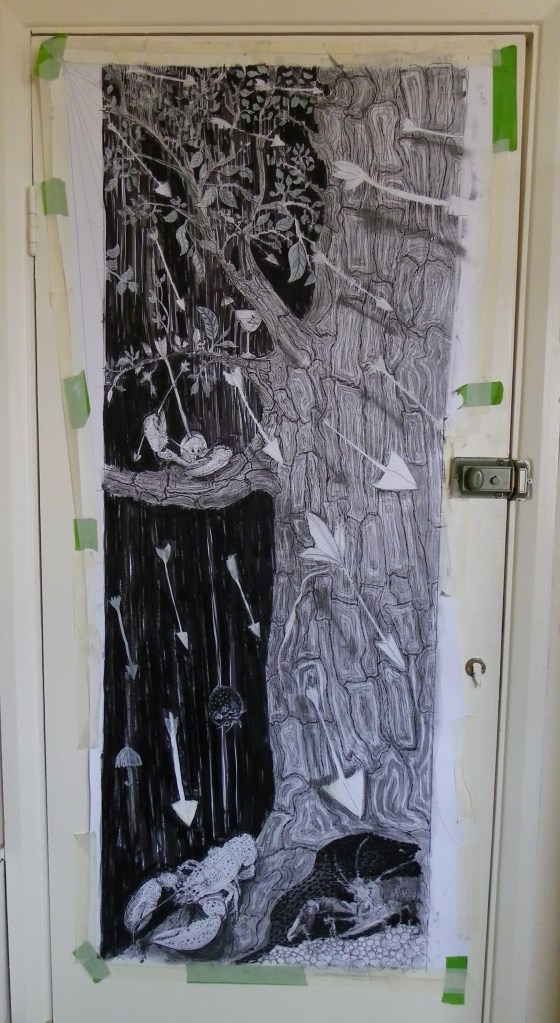
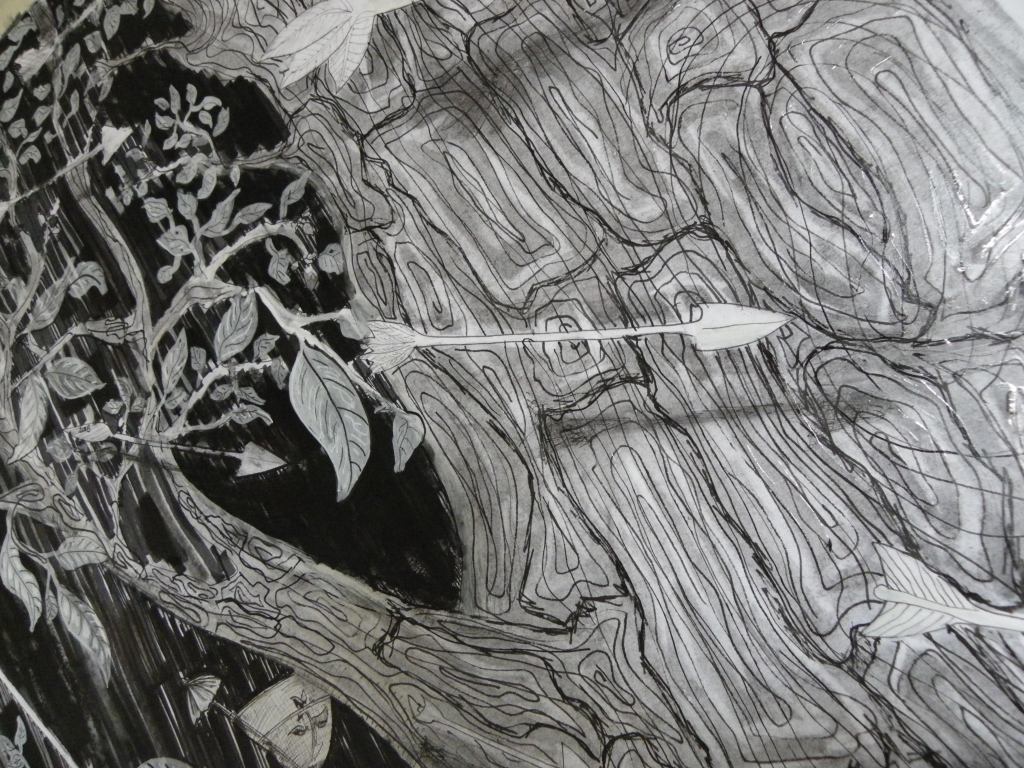


My own interpretation of Saint Sebastian’s motif came in the form of ‘Saint Sebastian’s Lobster Tree’, a mixed media drawing. It was part of a series inspired by picking up a book on Saints in order to understand the paintings in the National Gallery. I began reading through the stories and applying contemporary motifs to the narratives.
In this drawing the lobster, symbol of eternal life, functions as a contemporary motif for Sebastian, as a saint who left a double life to survive a death followed by a unified life and martyrdom. In surviving the arrow pelts Sebastian was like a lobster shedding a shell too small for it.
The image of arrows pelting into a tree holds so much appeal to artists. There’s the movement of it, the contrast in textures and the symbolism of the wooden arrows being taken from a tree to return to one.
The dimensions of this piece are quirky as during its creation the only flat space I had to draw on was my front door! This lead to several long and thin drawings which were not only a nightmare to frame but also a real pain to hang…however that is a tale for another day.
REFERENCE LINKS
Saint Sebastian – The Collection – Museo Nacional del Prado (museodelprado.es)
Cecco del Caravaggio | Martyrdom of Saint Sebastian | The Metropolitan Museum of Art (metmuseum.org)
One of the best survey articles I found during my research was from ArtUK Saint Sebastian as a gay icon | Art UK
Gerrit van Honthorst | Saint Sebastian | NG4503 | National Gallery, London
Saint Sebastian | Facts, Feast Day, Patron Saint Of, Tradition, Death, & Art | Britannica






 Charlie Kirkham
Leave a reply to Charlie Kirkham Cancel reply